A cake can look exceptional on the counter and still arrive with less impact if the packaging feels like an afterthought. For a customer collecting a celebration cake, gifting a dessert or sharing an order online, the box is the first physical part of the experience. It sets expectations before the lid is lifted, and it has a practical job to do on the journey home.
Premium cake packaging is not a matter of adding every available finish. The most effective designs bring together a well-considered structure, appropriate paper and surface treatment, a clear brand system and a few useful details that make the product easier to carry and present. This guide focuses on the choices that tend to make the biggest difference for bakeries, cafés, cake shops and dessert brands.
1. Start With a Cake Box Structure That Fits the Product
Structure comes before decoration. A box that is too tight can disturb icing, toppings or side decoration; a box with too much unused space can allow the cake board or dessert box to shift during handling. Measure the product as it will actually be sold, including the board, topper, lid clearance and any protective spacing. Then choose a format that closes cleanly without pressing against the cake.
Match the format to the cake
A standard single-piece cake box can suit many everyday orders, while taller formats may be better when a cake has height, a topper or elaborate finishing. Two-piece boxes can create a more gift-like opening experience. Windowed packaging can help show off cupcakes, pastries or decorated cakes at the point of sale. For tiered, unusually shaped or very delicate products, the brief should begin with the product dimensions and handling route rather than an assumed box style.
The key is not to treat a “premium cake box” as one universal format. A petite whole cake, a tall celebration cake and a multi-item dessert gift set place different demands on the box. A suitable structure makes the product feel deliberate and cared for, rather than simply enclosed.
Protect the presentation, not just the product
Ask how the box will be picked up, stacked, passed to a courier or carried through a busy day. A stable base, sensible internal clearance and a secure closure support a better handover. If a cake needs an insert, divider or additional support, that should be planned from the start rather than added after the box artwork is approved. KS Packaging’s range includes both custom paper boxes and carton boxes; its carton-box page specifically identifies cake-box supply as a packaging use case.
2. Choose Paper and Surface Treatment With the Brand in Mind
Material is felt before it is analysed. The visual weight of the board, the way colour prints and the tactile response of the surface all influence whether a box reads as playful, polished, understated or luxurious. The right choice depends on the brand, the artwork, the occasion and the anticipated customer experience, not simply on choosing the heaviest-looking material.
Matte, glossy and tactile approaches
A matte or velvet-like look can complement minimal identities, wedding cakes and gift-led assortments by keeping the attention on texture, typography and small details. Brighter or more graphic designs may benefit from a livelier printed finish. A kraft-inspired appearance can work well where a more natural, straightforward visual language suits the bakery. The important point is consistency: the box should feel like the same brand as the cake, menu, label and online photography.
3. Treat the Window as Part of the Presentation
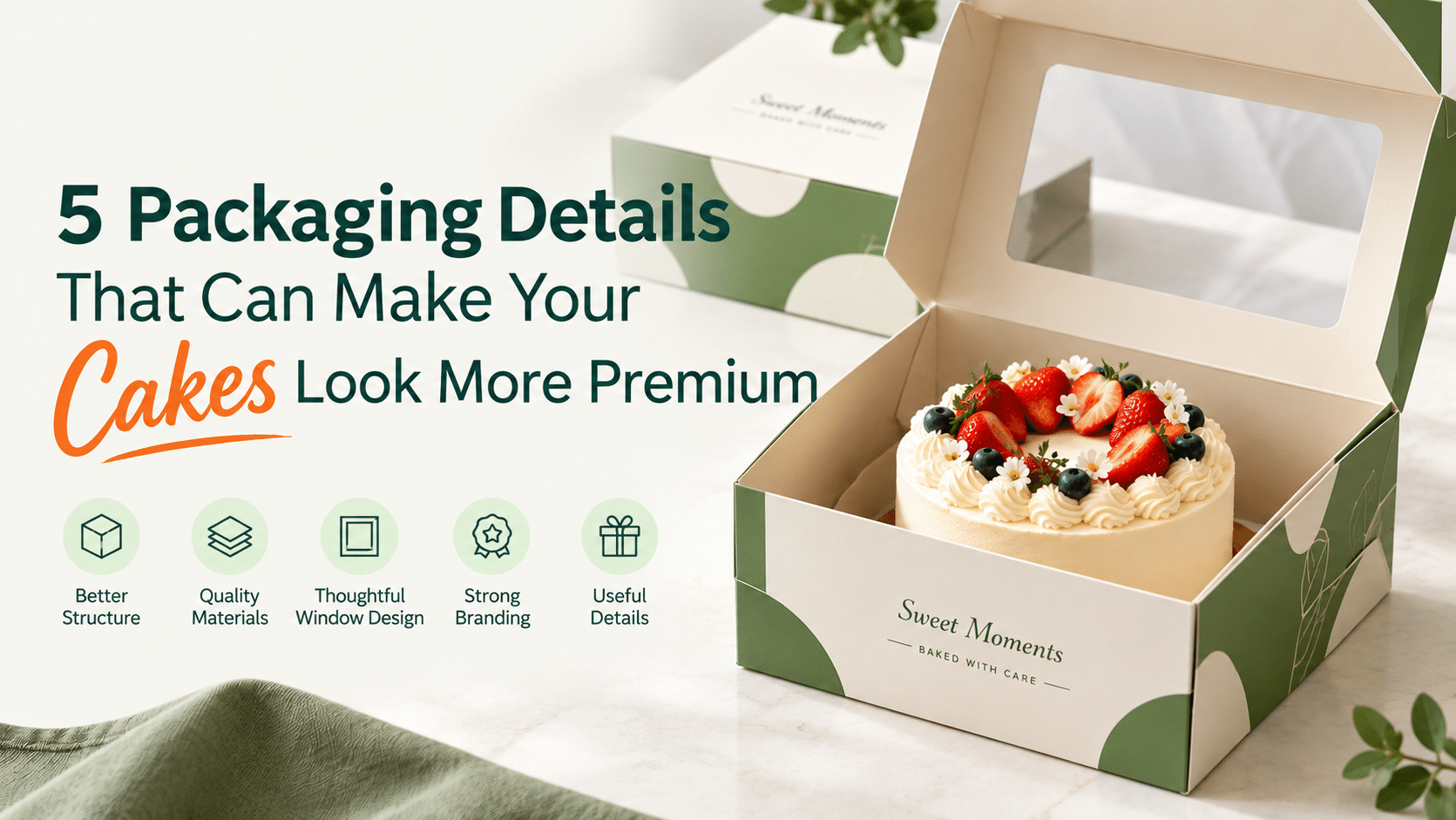
A well-placed window can make cake box packaging work harder at the moment of selection. It gives customers a preview of the decoration, colour and craftsmanship, which is especially useful for cupcakes, pastries, gift sets and celebration desserts displayed in-store. It can also create an attractive photographable moment before the box is opened.
However, a window should earn its place. Consider what the customer should see, whether the opening frames the product attractively and how the cut-out affects the rigidity of the lid or panel. A large window may be visually striking, but a smaller, carefully positioned shape can look more refined and leave more room for branding. Where the product or packaging may have direct-food-contact requirements, confirm the appropriate construction and materials with the packaging supplier for the intended use.
4. Refine the Branding Before Adding More Decoration
The quickest way to make branded cake boxes look considered is to be clear about the hierarchy. Customers should be able to recognise the logo, understand the tone of the brand and find practical information without searching through competing graphic elements. A disciplined palette, legible typography and a consistent logo position can feel more premium than a complicated illustration or several unrelated finishes.
Use printing techniques to support the idea
A foil accent can draw attention to a brand mark or limited-edition message; an embossed or debossed detail can add subtle depth; and selective gloss effects can create contrast on a matte surface. Used sparingly, these techniques make an identity more tactile and memorable. Used everywhere, they can compete with the product and make the design feel busy.
It is helpful to decide early what the hero element should be. For some bakeries it will be a graceful wordmark. For others it may be an illustration, a seasonal colour or a special-edition sleeve. KS Packaging lists customised paper boxes alongside printing and finishing services, so a focused packaging brief can combine the box format with the visual treatment rather than treating them as separate decisions.
5. Use the Small Details to Make the Purchase Easier to Enjoy
Small packaging details are often where customers notice care. An insert that keeps a cake board stable, a divider that stops cupcakes from touching, a sleeve that secures the closure or a simple card with storage and serving guidance can reduce friction without changing the core box design. Branded stickers, ribbons and tissue can also add personality when they have a clear purpose in the presentation.
The restraint matters. Premium does not mean crowded. If the box already has a strong surface finish and a clear brand mark, a quiet accessory may be enough. A practical test is to remove one element at a time: if the experience does not suffer, the extra item may not be necessary.
Why These Details Increase Perceived Value
People often judge a cake before tasting it. A box that opens neatly, protects the decoration and reflects the brand’s visual standard makes the order feel more giftable and more intentional. It can also make a bakery’s work easier to photograph and share, especially when collections and celebratory orders are a meaningful part of the business.
That does not mean every cake needs luxury packaging. The better aim is alignment. Everyday products can still feel premium when the box fits properly, the printing is clear and the experience is dependable. Special launches, festive gifting and higher-value cakes may justify more elaborate structures or finishing. The customer should feel that the packaging choice suits the product, not that the product is paying for decoration it does not need.
A Practical Framework for Choosing Cake Packaging
| Consideration | Questions to ask before approving the box |
| Cake format | What are the finished width, depth and height, including board, topper and clearance? |
| Handling journey | Will customers carry it directly, will it go by delivery, or will it be displayed before collection? |
| Visual presentation | Would a window, colour treatment or sleeve improve the moment of selection or gifting? |
| Brand direction | Is the desired impression clean and modern, warm and handcrafted, celebratory or luxury-led? |
| Useful details | Would a support, divider, care card or closure feature solve a genuine customer need? |
| Budget and scale | Which elements should be standard across the range, and which belong only on selected lines? |
Bring a physical sample of the cake, its board and any add-ons into the packaging discussion. It is the simplest way to reveal issues with height, movement or the unboxing sequence before artwork and production decisions become fixed. If the bakery is developing a gift range rather than a standard cake box, it may also be worth considering whether a premium rigid-box format is appropriate for the occasion.
KS Packaging’s rigid box page shows the type of premium presentation packaging it develops for confectionery and gifting categories.
Conclusion
The packaging details that make cakes look more premium are usually the ones customers notice without having to think about them: a box that fits, a surface that feels right for the brand, a window that reveals the product well, a clear visual identity and small functional touches that make collection or gifting smoother. Start with the product, then choose the design and finishing details that strengthen the experience.
Looking for custom cake boxes or presentation-led paper packaging for your bakery? Discuss the product format, artwork and finishing requirements with us through the contact page.
Frequently Asked Questions
1. What makes cake packaging look premium?
Premium cake packaging is purposeful rather than overloaded. It fits the product well, protects the decoration, uses a clear visual identity and adds only those finishing details that improve the look or customer experience.
2. What type of box is best for cakes?
The best box depends on the cake’s width, height, board, decoration and transport method. A standard cake, a tall celebration cake and a multi-item dessert set may each need a different structure. Test the actual product in the chosen format before finalising it.
3. Is customised cake packaging worth the investment?
Custom packaging can be worthwhile when it improves product protection, recognisability or gifting appeal. It is most effective when the structure and branding solve a clear need, rather than being customised only for novelty.
4. What printing finishes can be used on cake boxes?
The suitable finish depends on the material, artwork and intended visual effect. KS Packaging lists options including hot stamping, holographic hot stamp, Spot UV, embossing/debossing, velvet lamination, refraction printing and texture effects. Confirm what is appropriate for the final box format and design.
5. How can a small bakery create premium packaging on a budget?
Prioritise the basics: correct fit, a stable structure, a clean logo treatment and a limited colour palette. A simple box with thoughtful artwork often has more impact than several accessories or finishes that do not add practical or visual value.